The Genius of Moira Rose - And the Woman Who Gave Her a Voice
(Prefer to listen rather than scroll? Here is the audio version of the post.)
There’s an old bit by Alexei Sayle where he lists public figures as “alive” or “dead” and lets the unfairness do the punchline. It’s funny because it’s brutal. It’s also funny because it’s true. We all carry that private mental list, don’t we? The people who should have had more time, and the people who somehow keep toddling on, untouched, as if death has simply lost their postcode.
That unfairness is hitting hard today because Catherine O’Hara is gone. Seventy-one. Still working. Still brilliant. Still one of those performers where you assume there will always be another part, another cameo, another perfectly judged line reading that makes you laugh in spite of yourself. Instead, we’ve got the opposite: the abrupt realisation that we’ve already seen the last new performance.
The grief belongs to her family and friends. That’s not mine to claim. But I do think it’s okay to say the rest of us feel something too: a cultural kind of loss. A selfish-sounding sentence that is also, annoyingly, true. Comedy isn’t medicine, but it is companionship. And Catherine O’Hara has been a companion to a lot of us for a very long time.
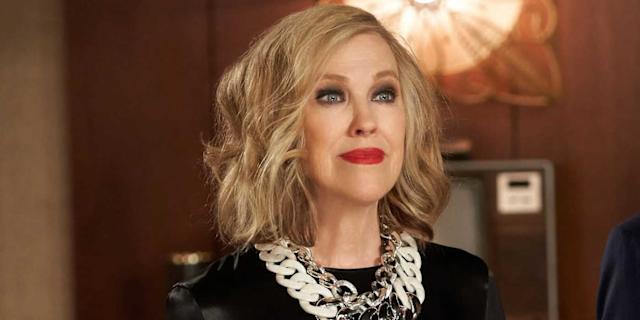
I’ve been talking about Moira Rose a lot this week for reasons I can’t talk about yet. Moira, as a character, feels like one of the great comedy miracles: lightning in a bottle, captured, labelled, and somehow still crackling when you open it years later. So, this is a celebration of one of Catherine O’Hara’s greatest creations: the incomparable, ridiculous, strangely profound Moira Rose of Schitt’s Creek.
Schitt’s Creek is one of those rare sitcoms where the humour doesn’t come from cruelty. It’s funny without punching down. It’s warm without being twee. It’s a world where LGBTQ+ characters aren’t forced to suffer for the plot, where poverty isn’t treated as a moral failing, and where people are allowed to be messy without being punished for it. It’s the kind of world we could actually live in, if some people weren’t permanently excited about flags, outrage, and controlling who’s allowed to use a toilet.
Yes, it’s in the writing. Yes, writing matters. But great characters are often built in the space between the page and the performance. Writers see what an actor does, then they adjust. They lean into the surprising choices. They amplify the weirdness that works. And Moira Rose is the perfect example of that partnership at its best: a character that could have been unbearable, transformed into a masterpiece because Catherine O’Hara knew exactly how to play her.
You want proof? Here are just some of the reasons Moira Rose will outlive all of us, including the people who currently think sitcoms are “low art”.
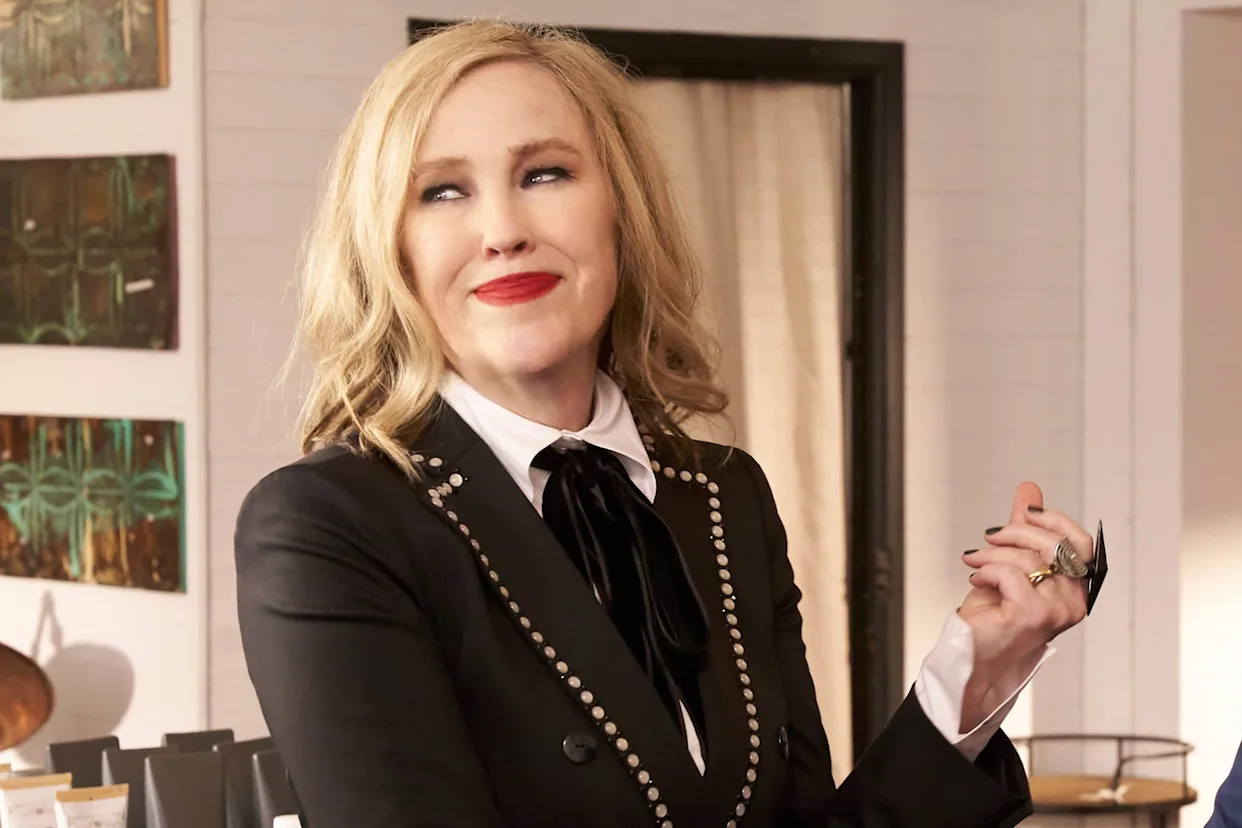
1. Moira takes up space, unapologetically
Moira doesn’t shrink. She doesn’t soften. She doesn’t apologise for being too much. In a culture that loves to reward women for being “nice”, “quiet”, “low maintenance”, Moira storms in like a chandelier in a charity shop and dares you to cope. She’s a reminder that being visible is not a crime.
2. She’s not a sitcom wife with a side plot
Moira is a woman with a full past. A career. An identity beyond being someone’s spouse. In so many sitcoms, the wife exists to react to the husband’s nonsense. Moira has her own mythology. Her own ego. Her own narrative. Johnny didn’t give her meaning; she arrived with it.
3. Her marriage is rock solid
Sitcom marriages are often built on contempt, nagging, or the dull ache of staying together out of habit. Moira and Johnny actually like each other. They respect each other. They’re on the same team. When they bicker, it’s never cruel. When they support each other, it’s never performative. Their relationship is one of the quiet triumphs of the show.
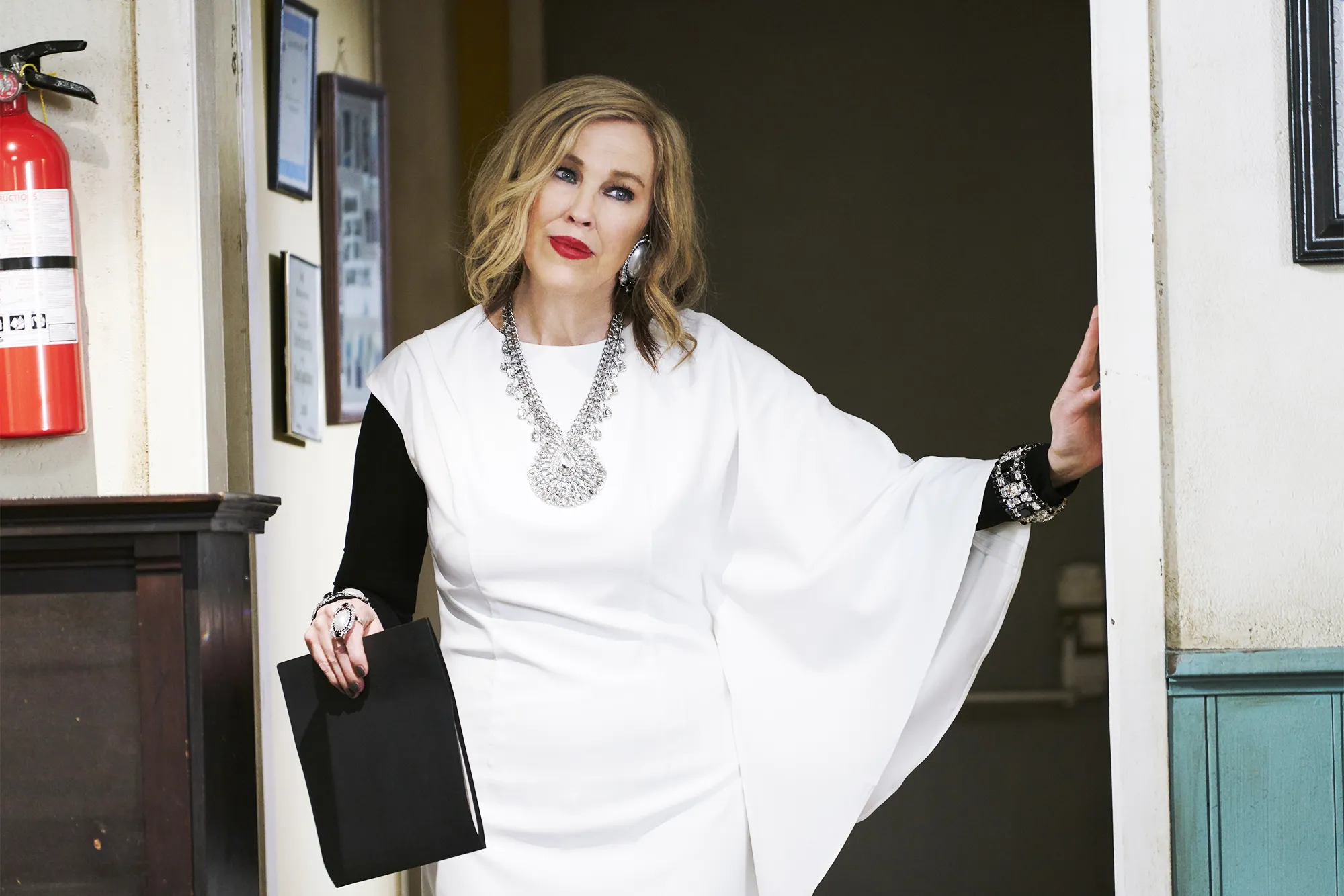
4. She looks selfish, but she’s fiercely protective
Moira can read as narcissistic on first watch. But then you notice the pattern: she turns up when it matters. She defends her family. She backs her children’s emotional needs even when she doesn’t fully understand them. She might get the tone wrong, but the loyalty is absolute.
5. The wigs aren’t a joke, they’re armour
Moira’s wigs are iconic because they’re doing character work. They’re not just a gag. They’re identity. They’re control. They’re protection. When everything else is taken away, Moira refuses to be stripped down into someone smaller. She keeps the glamour as a form of survival. And honestly, who among us wouldn’t want a wardrobe of alter-egos for coping with catastrophe?
6. The voice is a whole instrument
Moira’s vocal cadence and vocabulary are unmatched. She speaks in a dramatic, archaic, oddly international register, like she learned English exclusively from period dramas, perfume adverts, and a slightly haunted thesaurus. It shouldn’t work. It absolutely does. Catherine O’Hara turned language into physical comedy. You don’t just hear Moira, you feel her choices landing.

7. She’s vulnerable in a way that makes her endearing
Moira wants to be liked. She wants friends. She wants belonging, even if she approaches it like a bull in a china shop wearing couture. That’s the bit that sneaks up on you. Under the drama, she’s lonely. She’s trying. The town sees through the performance and meets the person underneath it.
8. She doesn’t “grow” in the usual way, because she didn’t need fixing
Moira changes circumstances, not personality. She adapts without becoming smaller. That matters. So often, character growth for women means becoming more palatable. Moira doesn’t become easier. The world expands to hold her. That’s not arrogance; that’s character.
9. Moira and Stevie are the emotional secret weapon
Some of Moira’s best work is in her scenes with Stevie. Johnny has his bond with Stevie. David has his friendship with her. But Moira is the one who sees Stevie’s potential and names it out loud. Episodes like “RIP Moira Rose” and “Life is a Cabaret” show Moira at her most unexpectedly generous. She doesn’t just encourage Stevie, she gives her permission.
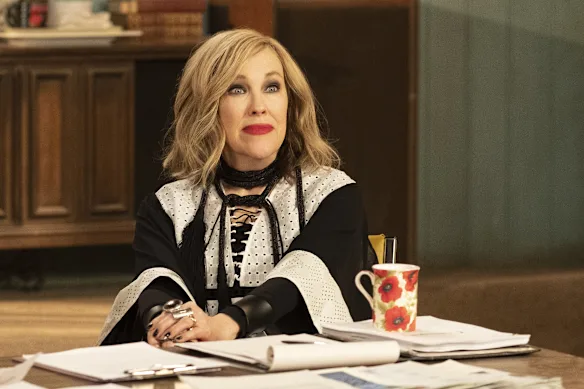
10. Catherine O’Hara made it immortal
This is the real one. Moira lives because Catherine O’Hara chose depth over mockery. She played Moira as a full human, not a cartoon. O’Hara was hesitant at first about committing to a series, then agreed to do the pilot to help the show get commissioned. And thank god she did. Because Moira Rose became a cultural landmark, and O’Hara’s performance earned major awards, including an Emmy and a Golden Globe.
The strangest thing about losing someone like Catherine O’Hara is realising how much of your comedic language is partly hers. The way you understand a certain type of character. The way you recognise a particular kind of humour that isn’t about being mean, but about being precise. She was brilliant in so many things, across decades, but Moira Rose feels like a culmination: experience, fearlessness, technical mastery, and an actor finally being given the space to go completely feral in the best possible way.
If there’s sadness in this, it’s not just that she’s gone. It’s that we were robbed of what she would have done next. And yes, that’s audience grief, not personal grief. But it’s still real in its own small way. We don’t just lose people. We lose their future work. We lose the surprises we didn’t know were coming.
So today, I’m choosing to hold it like this: a celebration with a tinge of sadness, not the other way round.
Thank you, Catherine O’Hara, for making comedy feel intelligent and silly at the same time. Thank you f or Moira Rose, a character who proved that women are allowed to take up space, be complicated, be loud, be stylish, be ridiculous, and still be deeply loved.
And thank you for the reminder, delivered in wigs and vowels, that survival can look like sparkle.
Cheers.
30 January 2026
What were your favourite Moira Rose or Catherine O'Hara moments? Let me know by clicking here.
You may also like:

Norm: Why Norm was the best character on Cheers
He wasn’t the star – he was the soul. Here’s why Norm Peterson was the best character on Cheers and how George Wendt made him unforgettable.